By Staff Writer, Oakley Kate
October 6, 2026, M.A.G.A. Daily News
Virginia Voting Rights Notices Raise Questions About Election Records
MAGA DAILY NEWS—Questions are growing in Virginia after reports that voting-rights restoration notices were sent to people who were already deceased. The notices are connected to Governor Abigail Spanberger’s effort to restore voting rights to Virginians with past felony convictions, a major policy issue that has become part of the state’s larger debate over voting access. The reports are raising concerns about how government records are checked and updated before official notices are sent to voters.
Why These Notices Are Getting Attention
The issue came to public attention after families reportedly received voting-rights restoration letters addressed to relatives who had already passed away. According to current reporting, the letters told recipients that their voting rights had been restored and directed them toward Virginia’s online voter registration system.
For families who received these notices, the situation was understandably confusing. A person who has passed away cannot register to vote or participate in an election, so a notice addressed to that individual naturally raises questions about how the person remained on the list used for the mailing.
It is important to separate the reported mailing problem from any claim that a deceased person actually voted. The current reports concern notices and records, not proof that deceased individuals cast ballots. That distinction matters when discussing election issues because a mistake in a government database is not automatically proof of election fraud.
The Larger Voting Rights Effort
Governor Spanberger has made restoration of voting rights a major part of her administration’s voting policy. Her administration has said that thousands of Virginians with past felony convictions have had their voting rights restored.
The governor has also supported a constitutional amendment that would automatically restore voting rights to eligible Virginians after release from incarceration. The proposal is part of a broader debate over how Virginia handles voting rights for people who have completed their sentences.
Virginia’s current system has a complicated history. The rules surrounding felony convictions and voting eligibility have changed through court decisions, executive actions, legislation and constitutional questions. That makes accurate government records especially important.
The Virginia Department of Elections has also been dealing with changes involving which felony convictions affect voting eligibility. Current state election guidance explains that some people convicted of certain felonies may need restoration of rights, while people convicted of other offenses may not need the governor’s restoration process.
How Government Records Can Become Complicated
Large government databases depend on information coming from many different sources. Voter registration records can be connected with information from courts, correctional agencies, state databases and death records.
When information changes in one system, it does not always mean every other database changes at exactly the same moment. Records can also contain different names, addresses, birth dates or other information that makes matching people more difficult.
That does not excuse errors, especially when elections are involved. It does show why election officials must use careful procedures when reviewing large numbers of records.
A notice being mailed to a deceased person can therefore raise an important question without automatically answering it: Was the person still considered eligible in the database, or did the mailing list fail to receive updated information?
Those are questions that officials can answer by examining the records and explaining how the list was created.
The Timing Has Also Drawn Attention
The timing of the notices has added another layer to the story. Reports indicate that some families received the letters around the time early voting was beginning in Virginia.
That timing naturally attracts public attention because election activity increases during the weeks leading up to Election Day. Voters want confidence that registration systems are accurate and that election officials know who is eligible to participate.
At the same time, the reported restoration orders were dated months earlier. That means the timing of the letters does not necessarily mean the restoration decisions themselves were made during early voting.
Understanding that difference is important. A letter arriving shortly before an election does not automatically mean the underlying government action happened shortly before the election.
What Officials Need to Explain
The biggest question now is how the names were selected for the notices.
Officials can help clear up the controversy by explaining what databases were used, when those databases were updated and what checks were performed before the notices were mailed.
Another important question is whether the names of deceased people were already known to state election officials before the letters went out.
If death records were available but were not properly matched against the mailing list, that would point to a record-management problem that deserves attention. If the information was not available to the agency at the time, officials can explain why and describe what steps are being taken to improve the process.
The public deserves clear answers because confidence in elections depends not only on accurate results but also on confidence in the systems used to maintain voter records.
This Does Not Prove Election Fraud
It is also important to keep the facts separate from speculation.
A deceased person receiving a government letter is unusual and deserves an explanation. However, the existence of such a letter by itself does not establish that a deceased person voted, that someone voted using that person’s identity or that an election was improperly influenced.
Those would require separate evidence.
Election records are complicated, and mistakes can happen in large databases. The proper response is to investigate the specific records, determine how the error occurred and correct the problem when necessary.
That approach allows legitimate concerns to be examined without making claims that have not been established. However, the truth of the matter is either the dead person voted or someone voted using their name, let’s be real. The leftist would have you believe that it was a machine malfunction, but whatever.
Why Election Record Accuracy Matters
Accurate voter records are important regardless of political party. Republicans, Democrats and independent voters all have a reason to expect election systems to maintain reliable information.
When a government agency sends an official notice to someone who has passed away, people naturally want to know how it happened. The concern becomes even greater when the notice involves voting rights and arrives during an active election period.
The answer should come from records, procedures and evidence rather than political assumptions.
If an error occurred, the public should know what caused it and whether similar problems could affect other records. If the state’s systems worked as designed and the problem occurred somewhere else in the process, officials should explain that as well.
Transparency is the best way to address questions surrounding election administration.
Virginia’s Bigger Debate Over Voting Rights
The controversy comes during a much larger debate about voting rights in Virginia. Governor Spanberger has argued that people who have completed their sentences should have a clear path back into civic life.
Her administration has also promoted changes intended to make voting access easier for eligible Virginians.
Critics, however, can still question how quickly large numbers of records are processed and whether proper safeguards are being used. Those concerns do not necessarily oppose voting rights restoration itself. They focus on whether the process is accurate and properly managed.
That distinction is important because both things can be true at the same time: eligible citizens can have their voting rights restored, and government agencies can still be expected to maintain accurate records.
The Questions Will Continue
For now, the reported notices have created more questions than answers.
Why did notices go to people who had already passed away? How were the names selected? Were death records checked before the notices were mailed? Did the notices come from the same process used to update voter registration records? And what steps will Virginia take to prevent similar mistakes?
Those are reasonable questions for election officials to answer.
The issue also demonstrates why election administration deserves careful public oversight. Voter registration, eligibility and rights restoration involve sensitive government records, and even a relatively small number of errors can create public concern when they become visible.
The goal should be simple: eligible voters should be able to participate, people who are not eligible should not be added to voter rolls, and government records should be maintained as accurately as possible.
As Virginia continues its debate over voting rights, the reported notices provide another reason for officials to explain exactly how their systems work. Americans do not need rumors or speculation to understand election administration. They need accurate information, transparent procedures and clear answers when something appears to have gone wrong.
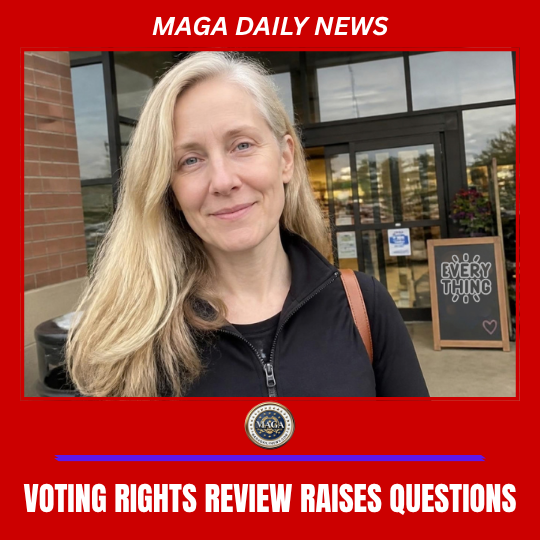
Disclaimer: This information is based on current reports and is for informational purposes only. The photo illustration and text caption are AI generated. We represent M.A.G.A. — Morals ● Action ● God ● America—M.A.G.A., an online daily faith based news editorial.