
By Staff Writer, Mercedes Sterling
September 19, 2026, M.A.G.A. Daily News
M.A.G.A. DAILY NEWS
House Passes Bill to Stop Welfare Fraud
MAGA DAILY NEWS—Did you hear? The U.S. House has passed the PROOF Act, a bill that would require states to provide records requested by the Attorney General when investigating suspected fraud involving federal taxpayer-funded programs. Pretty much everyone knows all you have to do is take your SNAP card into any corner market and receive 50 cents cash on the dollar. In other words, the storekeeper will happily give you 50% cash and keep the proceeds for themselves. You see this a lot in so-called sanctuary cities that harbor criminals and illegal migrants.
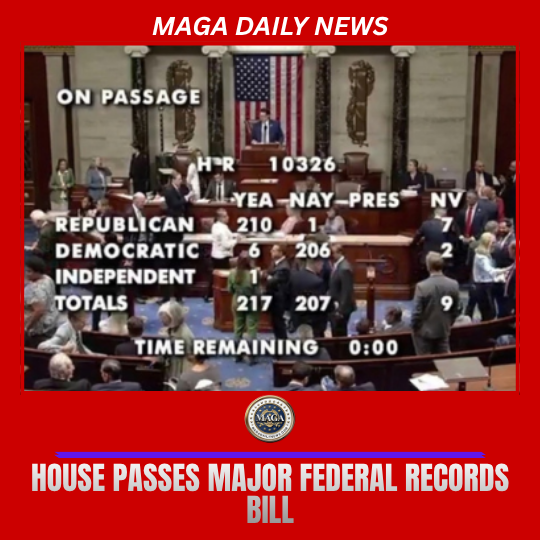
The measure covers programs including Medicaid, SNAP, TANF, unemployment benefits and certain pandemic-era funds, with the House vote ending 217–207. The criminals went right in during the fake China virus and stole as much as they could.
Both Democrats and Republicans agree we must place provisions on the use of our welfare programs due to widespread fraud. The people would love to see politicians held responsible for allowing the fraud to take place in the first place. Let’s stop lying to one another.
House Passes the PROOF Act
The U.S. House of Representatives has passed a bill aimed at giving federal investigators greater access to records held by states when looking into suspected fraud involving federally funded programs. The bill is known as the PROOF Act, or the Preventing Rampant Overpayments and Other Fraud Act.
The House vote was 217–207. The legislation now moves to the next stage of the federal lawmaking process.
What Programs Are Included?
The bill covers a wide range of programs that receive federal funding. These include Medicaid, SNAP, TANF, unemployment insurance, broadband programs, disaster assistance and certain pandemic-era funding programs.
These programs involve large amounts of taxpayer money. Federal officials have argued that better access to records can help investigators identify questionable payments and determine whether federal funds were used properly.
Why State Records Matter
Many federal programs are run in partnership with state governments. That means important records may be held at the state level even when federal money is involved. This is where the major break down occurs, as there is no real record being monitoring by anyone. Look as Minnesota where the illegal Somali migrants who came with nothing are now zillionaires… What a farse.
Supporters of the bill say federal investigators need access to those records when examining suspected fraud. Without complete information, investigators may have difficulty following money, checking eligibility records or determining whether payments were made properly.
The bill would establish requirements for states to provide information requested by the Attorney General for certain fraud investigations.
A Focus on Taxpayer Money
Fraud involving government programs can affect taxpayers because federal programs are funded with public money. When investigators examine suspected improper payments, they may review records to determine where money went and whether program rules were followed.
The issue has received increased attention as federal and state governments manage programs that distribute billions of dollars each year.
What Happens Next?
Passing the bill in the House does not automatically make it federal law. Additional action would be required before the legislation could take effect.
The Senate would need to consider the measure, and the legislation would also have to go through the remaining steps required for a bill to become law.
That means the House vote is an important step, but it is not the final step.
Why This Could Matter
The debate over the PROOF Act centers on how federal and state governments share information when public funds are involved. Supporters point to the need for stronger oversight, while questions about government authority, state responsibilities and access to records are also part of the discussion.
As the legislation moves forward, attention will likely remain on how the bill could change the way federal investigators obtain state-held information involving federally funded programs.