By Staff Writer, Mercedes Sterling
October 28, 2026, Maga Daily News
Mike Waltz Defends America at United Nations During Heated Dispute With Cuba’s Foreign Minister
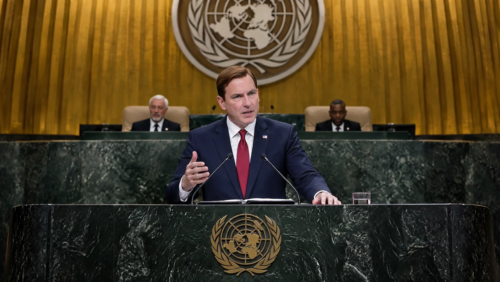
Maga Daily News— Mike Waltz defends America at United Nations during heated dispute with Cuba’s Foreign Minister. A heated dispute between U.S. Ambassador Mike Waltz and Cuban Foreign Minister Bruno Rodríguez Parrilla disrupted the United Nations General Assembly on Tuesday, October 27, 2026, during a debate over the decades-old U.S. trade embargo against Cuba. The disagreement drew attention to the deep divide between Washington and Havana over Cuba’s government, economic conditions, and the future of American sanctions. Waltz defended the United States’ position and accused Cuba’s leaders of benefiting from wealth while many ordinary Cubans continued to face hardship. Rodríguez Parrilla rejected Waltz’s claims, and the exchange became one of the most tense moments of the meeting.
A Debate Over America’s Longstanding Cuba Policy
The confrontation took place during the General Assembly’s annual discussion of a resolution calling for an end to the U.S. economic embargo against Cuba. The policy has been a major source of disagreement between the two countries for more than six decades. The United States maintains that its restrictions are a tool for pressuring Cuba’s government, while Cuban officials argue that the sanctions damage the country’s economy and hurt ordinary families.
The United Nations General Assembly has repeatedly supported resolutions calling for the embargo to end. These resolutions express the views of member nations but are not legally binding on the United States. The decision to change the American embargo rests with the U.S. government and Congress under the applicable laws.
This year’s debate came as Cuba continued to face serious economic challenges, including fuel shortages, power disruptions, and difficulties obtaining goods. American officials have placed responsibility for many of the country’s problems on its political leadership and economic system. Cuban officials, meanwhile, argue that U.S. restrictions make an already difficult situation worse.
Waltz Challenges Cuba’s Leadership
During his remarks, Waltz sharply criticized Cuba’s government and questioned how the country’s leaders accumulated and used their wealth. He argued that the government’s leadership had benefited while many Cubans faced financial hardship and limited economic opportunities.
Waltz presented photographs of former Cuban leader Fidel Castro and current Cuban President Miguel Díaz-Canel, claiming that the images showed luxury watches worn by the country’s leaders. He used the photographs to argue that the lifestyles of those in power stood in contrast to the financial struggles experienced by ordinary citizens.
Waltz also raised concerns about property confiscations, government control of businesses, and the handling of Cuba’s national wealth. He argued that the international community should look beyond the Cuban government’s criticism of American sanctions and consider the decisions made by Cuba’s own leadership.
These accusations were central to Waltz’s argument against the annual resolution. His position was that ending the embargo without addressing Cuba’s political and economic system would fail to resolve the deeper problems facing the country.
The Cuban government disputes the American position and has long argued that the embargo is a major obstacle to economic growth. The disagreement reflects a wider conflict over who should bear responsibility for Cuba’s economic conditions and what steps would lead to lasting change.
The Exchange Moves Beyond Policy
As Waltz continued speaking, members of the Cuban delegation objected to his remarks. Reports from the meeting described delegates shouting from their seats and striking their table as the American ambassador continued his address.
Rodríguez Parrilla then moved toward the front of the assembly hall while challenging Waltz’s statements. The disagreement shifted from a debate over economic policy into a direct exchange between the two officials.
Waltz responded by defending his right to deliver the American position before the international body. He told the Cuban foreign minister, “This is America, my friend. This is the United Nations. This isn’t your communist dictatorship. You cannot silence me.”
His remarks made clear that he viewed the Cuban delegation’s actions as an attempt to disrupt his speech. Waltz argued that representatives of the United States should be able to present their views without being interrupted or pressured to stop speaking.
The exchange continued as Rodríguez Parrilla challenged Waltz’s statements and questioned the way the American ambassador was presenting the Cuban government. The disagreement became loud enough that the presiding officer intervened in an effort to restore order.
United Nations Officials Pause the Meeting
The president of the General Assembly, Khalilur Rahman, attempted to manage the dispute as the two delegations exchanged accusations. When the confrontation continued, the meeting was suspended temporarily.
The pause gave officials an opportunity to restore order and remind representatives of the procedures governing the debate. The rules of the General Assembly allow delegates to raise procedural objections, which are handled by the presiding officer.
After the meeting resumed, Rodríguez Parrilla was given an opportunity to raise a point of order. He used his remarks to challenge Waltz’s statements and accused the American ambassador of making false claims about Cuba.
The exchange demonstrated how quickly disagreements over international policy can disrupt formal diplomatic proceedings. The General Assembly brings together representatives from countries with sharply different political systems and national interests. Its meetings provide a public setting for those disagreements, but officials are still expected to follow established rules.
Despite the confrontation, Waltz continued his address and urged delegates to vote against the resolution calling for an end to the embargo.
Why the Embargo Debate Matters
The dispute reflects a longstanding disagreement over American policy toward Cuba. Supporters of maintaining pressure argue that the United States should not remove its restrictions without meaningful changes from Havana. They point to concerns about political freedoms, government control, and the treatment of people who challenge the Cuban leadership.
Critics of the embargo argue that decades of economic restrictions have failed to bring the political changes Washington has sought. They say the policy places additional pressure on Cuban families by making trade, investment, and access to certain goods more difficult.
Both positions remain part of the international debate. The embargo has survived changes in American administrations and repeated calls at the United Nations for it to end.
For the United States, the issue also involves relations with other countries in the region and the broader question of how Washington should respond to governments it considers authoritarian. For Cuba, the dispute is tied to national sovereignty, economic survival, and its opposition to American pressure.
The annual General Assembly resolution does not force Washington to change its policy, but the vote provides a measure of international opinion. It also gives both governments an opportunity to present their arguments before a global audience.
A Diplomatic Dispute With Wider Implications
The confrontation between Waltz and Rodríguez Parrilla placed the disagreement between the two governments in the spotlight. It also showed how personal exchanges between diplomats can draw attention away from the policy questions being discussed.
Waltz used his address to defend the American position and challenge Cuba’s leadership over allegations of wealth and government conduct. Rodríguez Parrilla disputed those accusations and defended Cuba against Washington’s criticism.
The larger issues remain unresolved. The United States continues to debate the purpose and effectiveness of its restrictions, while Cuba faces serious economic problems and maintains that the embargo contributes to those difficulties.
The dispute at the United Nations did not settle those questions. Instead, it underscored how far apart the two governments remain and how difficult it may be to reach agreement on the future of U.S.-Cuba relations.
As delegates consider the latest resolution, the central disagreement remains whether continued American pressure is necessary to push for change or whether ending the embargo would create better conditions for the Cuban people. That debate extends well beyond one tense meeting and remains an important issue in American foreign policy.
Disclaimer: This information is based on current reports and is for informational purposes only. The photo illustration and text caption are AI generated. We represent M.A.G.A. — Morals ● Action ● God ● America—Maga Daily News., an online faith based news editorial.