By Staff Writer, Oakley Kate
October 11, 2026, M.A.G.A. Daily News
Ethics Complaint Raises Questions About Letitia James and the Cornell 7 Case
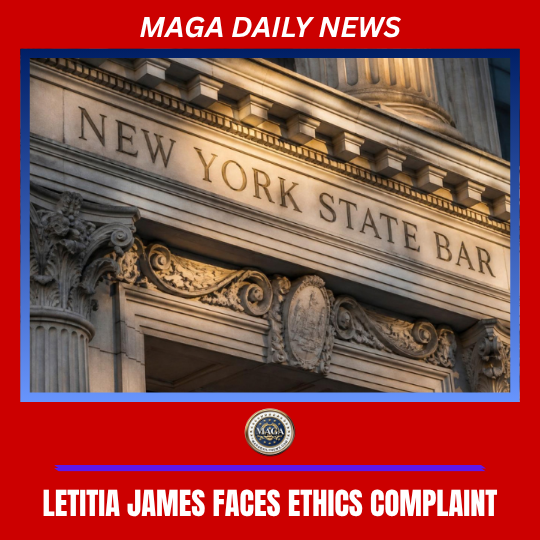
Maga Daily News— An anti-corruption group has filed an ethics complaint calling for New York Attorney General Letitia James to step aside from the “Cornell 7” case. Letitia is well known for making stupid statements in public.
The complaint points to a social media post James wrote before she became the special prosecutor in the matter. The group argues that her earlier statement raises questions about whether she can fairly handle the case. The issue centers on prosecutorial ethics, impartiality, and the standards public officials are expected to follow when they take on important legal responsibilities.
What Is the Complaint About?
The complaint focuses on a statement James made on social media before she took on the role of special prosecutor. The group that filed the complaint believes the earlier post is important to deciding whether she should continue in that position.
The central question is whether her past words conflict with the duties she must carry out in the case. Prosecutors are expected to follow professional rules and handle their responsibilities fairly. When concerns arise about a prosecutor’s public statements, those concerns may lead to a request for an ethics review.
The complaint seeks a specific result: for James to step aside from the case. Whether that request is supported by the applicable rules depends on the facts, the full context of the statement, and the standards that govern her role.

Why a Prosecutor’s Past Statements Matter
A prosecutor’s job carries serious responsibilities. Prosecutors make decisions that can affect people’s reputations, rights, and futures. Because of that, the public has a strong interest in knowing whether those decisions are made fairly and according to the law.
Public statements can become important when they raise questions about whether an official has already formed a view about a matter they are assigned to handle. The timing and wording of a statement can matter, as can its connection to the people or events involved in a case.
However, not every strong opinion or public statement automatically prevents a prosecutor from handling a case. The specific facts and applicable professional rules determine whether a conflict exists and whether any action is required.
That is why the contents of the post, the circumstances in which it was written, and the role James later accepted are important parts of this controversy.
What Does It Mean to Step Aside?
When someone asks a prosecutor to step aside, the request is generally based on a concern that the prosecutor may not be the proper person to handle a particular matter. Depending on the circumstances, the issue may involve a conflict of interest, possible bias, or another professional concern.
If the applicable rules require a prosecutor to withdraw because of a conflict, that requirement must be taken seriously. Public officials are not exempt from professional standards simply because they hold high office.
At the same time, whether withdrawal is required depends on the facts and governing rules. An outside group can raise concerns and request a review, but the filing itself does not decide the issue.
The important question is whether the complaint identifies a real conflict under the standards that apply to James in this role. That is the matter that needs to be examined rather than decided by political loyalty or public opinion alone.
What Is the Cornell 7 Case?
The complaint concerns James’s role as special prosecutor in a matter referred to as the “Cornell 7” case. Understanding the case itself is important because the relevance of a prior public statement depends on what the case involves and how the statement relates to it.
The available description of the complaint identifies the earlier social media post as the reason the group wants James to withdraw. More details about the post, the events behind the case, and the precise legal grounds for the complaint are necessary to assess the group’s argument fully.
Readers should distinguish between the underlying case, the decision to appoint a special prosecutor, and the separate ethics complaint challenging that prosecutor’s participation. These are related issues, but they are not the same proceeding.
The complaint raises a question about who should handle the case. It does not, by itself, resolve the underlying matter or determine the outcome of any legal proceedings.
Why Accountability Matters for Every Public Official
Public trust depends on consistent standards. People should be able to expect government officials to follow the same professional rules regardless of their political party, public profile, or personal views. In this case, Letitia James shojuld have known better than to run her mouth giving her opinion in public. Moreover, Letitia does know better and does it anyway. Letitia like anyone else is not above the law.
That principle applies to elected officials, prosecutors, judges, and other people entrusted with public responsibilities. When a complaint raises a credible question about whether an official can properly perform a role, the concern deserves a fair review.
Accountability also means examining the facts before reaching a conclusion. A complaint should not be dismissed simply because it is politically inconvenient, nor should its claims be treated as proven just because they have been filed.
A fair process looks at the actual words used, the context in which they appeared, the rules that apply, and the evidence supporting the complaint. That approach protects both the integrity of the legal system and the rights of the people involved.
What Happens Next?
The next important developments would include any response from James or her office, any action taken by the body responsible for reviewing the complaint, and any decision about whether she should remain involved in the case.
The outcome will depend on the complaint’s grounds, the applicable professional standards, and the findings of any review. Without those details, it would be premature to state that James must withdraw or that the complaint has no merit.
The public should also look for the original social media post and the complaint itself, when available, rather than relying only on short summaries. Reading the actual documents can help readers understand exactly what was said, what rules the group believes apply, and what remedy it is seeking.
The Bottom Line
The ethics complaint against Letitia James raises a serious question about the standards that apply when a prosecutor takes responsibility for a case. The group filing it wants James to step aside because of a social media post she wrote before becoming special prosecutor.
Whether that post creates a disqualifying conflict depends on the facts and the rules governing her role. If those rules require withdrawal under the circumstances, they should be applied consistently. If the complaint does not establish such a conflict, that conclusion should also rest on the applicable standards and evidence.
The public deserves a clear explanation of the complaint and a fair review of the issues it raises. In matters involving prosecutors, impartiality and accountability are not merely political talking points. They are important principles for maintaining confidence in the justice system.
Disclaimer: This information is based on current reports and is for informational purposes only. The photo illustration and text caption are AI generated. We represent M.A.G.A. — Morals ● Action ● God ● America—M.A.G.A., an online daily faith based news editorial.