
By Staff Writer, Oakley Kate
Novermber 13, 2026, Maga Daily News
SpaceX Starship Booster Explodes After Failed Landing Catch During Texas Test Flight
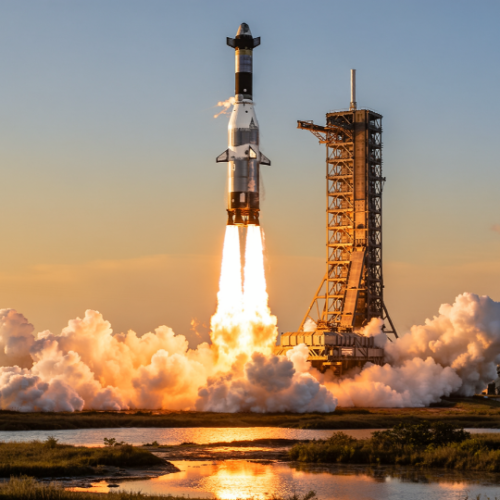
Maga Daily News—SpaceX Starship booster explodes after failed landing catch attempt. SpaceX’s latest Starship test flight ended with a dramatic scene after its massive rocket booster failed to complete a planned landing catch at Starbase, Texas. The spacecraft successfully lifted off, but the return of the powerful booster did not go as planned. Instead of being caught by the large mechanical arms attached to the launch tower, the booster descended into the water and erupted in a fiery explosion. The incident brought attention to the challenges SpaceX faces as it works to develop a rocket system that can launch, return, and fly again. While the successful launch was an important part of the test, the failed recovery showed that there is still more work ahead.
A Powerful Launch From Texas
Starship is one of the largest and most powerful rocket systems ever developed. SpaceX designed it to carry people, equipment, and supplies into space. The company also hopes the system will one day support missions to the Moon and Mars. The rocket launches from Starbase, SpaceX’s private launch and development site in South Texas. Each test flight gives engineers a chance to study how the vehicle performs during launch, flight, and return. Unlike traditional rockets that are often discarded after one mission, Starship is being developed with reuse as a major goal. This means SpaceX wants to recover and reuse important parts of the rocket rather than build an entirely new vehicle for every launch.
The Booster Did Not Make Its Planned Catch
One of the most unusual parts of the Starship program is the planned recovery of its Super Heavy booster. SpaceX has developed a system that uses two large mechanical arms on the launch tower to catch the booster as it returns from flight. The system is often called the chopstick catch because of the way the two arms reach out and hold the returning rocket. The goal is to bring the booster back to the launch site without requiring it to land on its legs or fall into the ocean. However, this recovery method requires extremely careful timing and control. The booster must return at the correct angle, slow down, and reach the tower at just the right moment. During this latest test, the planned catch was aborted, and the booster did not return to the tower. Instead, it came down into the water and exploded.
Why Recovering the Booster Matters
Recovering the Super Heavy booster is a major part of SpaceX’s long-term plan. Building a rocket requires large amounts of materials, equipment, time, and money. If a booster can be safely recovered and prepared for another flight, the company could reduce the cost and time needed between launches. This is similar to the way commercial airplanes are used for many flights instead of being replaced after every trip. SpaceX wants to bring that same idea to rocket travel. The company has spent years working on ways to make rocket recovery faster and more reliable. A successful tower catch is an important step toward that goal. When a recovery attempt does not go as planned, engineers have another opportunity to study what happened and make changes before future flights.
Starship Is Built for Bigger Missions
SpaceX is not developing Starship simply to send a rocket into the sky. The company has much bigger plans for the vehicle. Starship is being designed to carry large amounts of cargo and eventually transport astronauts on missions beyond Earth. One of the major goals is supporting future NASA missions to the Moon. NASA selected a version of Starship to serve as a lunar landing system for its Artemis program. That system is expected to play a role in bringing astronauts from lunar orbit down to the Moon’s surface and back. SpaceX also has its sights set on Mars, where the company hopes Starship could eventually carry people and supplies. These plans depend on the rocket becoming dependable enough to support demanding missions. That is why every test flight matters, even when parts of the mission do not go as expected.
Testing Comes With Challenges
Rocket development is not a simple process. Engineers must account for extreme heat, pressure, speed, fuel systems, and the powerful forces that affect a vehicle during flight. A rocket that performs well during launch must also handle the difficult conditions of returning through Earth’s atmosphere. The Super Heavy booster must manage its speed and direction as it travels back toward the launch area. It must also complete a series of carefully planned steps before any recovery can happen. Even a small problem can affect the final part of the flight. SpaceX uses test flights to collect information about how the rocket and its systems perform under real conditions. The company can then review the results and use what it learns to improve future versions.
The Difference Between Launch Success and Recovery Success
It is important to understand that a successful launch and a successful booster recovery are two different parts of a rocket mission. A rocket can lift off and complete important flight objectives even if the booster does not return safely. In this case, Starship successfully launched, but the booster did not complete its planned tower catch. That means the mission had a successful launch phase but an unsuccessful booster recovery attempt. Both parts provide useful information for engineers. The launch helps demonstrate the vehicle’s ability to leave the ground and travel into flight, while the recovery attempt tests whether the booster can return and be caught. SpaceX is working to make both parts of the process more dependable.
Why the Explosion Matters for Future Flights
The explosion is likely to draw attention because recovering and reusing the booster is one of the most important parts of the Starship program. The company wants to move toward a future where rockets can be prepared for another flight without having to build a completely new booster each time. A successful recovery system could change the way space missions are planned and carried out. However, reaching that goal requires repeated testing and improvements. Engineers will need to examine the information collected during the flight to understand what happened during the aborted catch and the booster’s descent into the water. The exact technical cause should not be assumed without an official explanation from SpaceX. What is clear from the reported outcome is that the booster did not complete the planned recovery.
SpaceX Continues Its Push Toward the Future
SpaceX has made rocket recovery and reuse a central part of its business. Its Falcon 9 rockets have already shown that certain rocket stages can return to Earth and fly again. Starship takes that idea much further because of its enormous size and the different challenges involved in recovering both the booster and the spacecraft. The company is attempting to build a system that could eventually support frequent launches and major space missions. That is an ambitious goal, and it requires technology that has never been used on this scale before. Each test flight helps SpaceX learn more about the vehicle and its performance. Some tests produce major successes, while others end with equipment that must be studied and improved.
What Happens Next?
The next steps will depend on the information SpaceX collects from this test flight and any findings the company shares publicly. Engineers will need to review the booster’s flight data and examine the recovery attempt. That information can help determine what changes may be needed before another attempt is made. Future testing will continue to focus on improving the launch, flight, and recovery systems that make Starship different from traditional rockets. The long-term goal remains the same: create a powerful rocket that can carry large payloads into space and return important hardware for reuse. The latest booster explosion is a reminder that reaching that goal will take time, careful testing, and continued improvements.
A Dramatic Setback in a Major Space Program
SpaceX’s latest test flight showed both the promise and the challenges of modern rocket development. Starship successfully launched, but the massive Super Heavy booster failed to complete its planned return to the launch tower. Its descent into the water and fiery explosion made for a dramatic ending, but the larger story is about the difficult work involved in developing reusable rockets. SpaceX is trying to change how the world reaches space, and that requires testing technology under real flight conditions. The company still has major goals ahead, including future Moon missions and its long-term plans for Mars. For now, the failed booster catch is another important event engineers will need to study as they work toward making Starship a more reliable system.
Disclaimer: This information is based on current reports and is for informational purposes only. The information herein is approximate and not scale. The photo illustration and text caption are AI generated. We represent M.A.G.A. — Morals ● Action ● God ● America—Maga Daily News., an online faith based news editorial. #magadailynews Linktree