By Staff Writer, Oakley Kate
September 27, 2026, M.A.G.A. Daily News
Rebpublicans and Democrats Believe the Move is Illegal
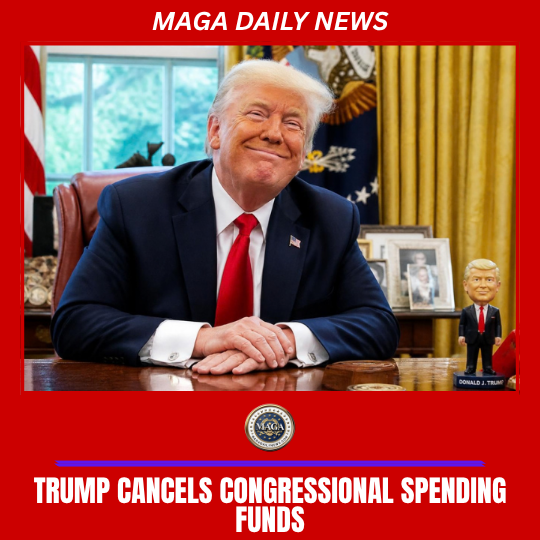
MAGA DAILY NEWS—President Donald Trump’s administration is moving to cancel about $810 million in federal spending that Congress had previously approved. The move has created a major debate in Washington over government spending, immigration-related services and how much control a president has over money that Congress has already approved. The White House says the money should no longer be spent on programs it considers wasteful or harmful, while lawmakers from both parties are questioning whether the administration has the authority to cancel the funding without Congress taking another vote.
Where Was the Money Going?
The $810 million was not one single program or one large check. It was spread across several federal agencies and programs involving immigration services, education, housing counseling, health research, minority business programs and international education.
The largest amount was approximately $567 million connected to Health and Human Services programs serving refugees, asylum seekers, unaccompanied children and other noncitizens. The White House argues that changing conditions at the southern border mean some of this funding is no longer necessary.
Other money included approximately $25 million for Department of Education programs involving migrant students. There was also about $56 million connected to housing counseling through the Department of Housing and Urban Development.
Another $15 million was connected to the Justice Department’s Community Relations Service, which works with communities on racial and ethnic tensions. About $10 million was directed toward Minority Business Development Agency programs. The package also includes funding for international education, health research and other federal programs.
Why Is Trump Trying to Cancel It?
The Trump administration says the federal government should stop spending taxpayer money on programs it believes do not provide enough benefit to American citizens. The White House has specifically pointed to programs serving noncitizens and programs it says are based on policies the administration does not support.
The administration is using a rarely used budget procedure known as a “pocket rescission.” The White House says the procedure is allowed under the Congressional Budget and Impoundment Control Act and gives the president a way to propose canceling money before the end of the fiscal year.
Why Are Lawmakers Challenging It?
The biggest disagreement is not simply about the programs themselves. It is also about who has the final say over federal spending.
Congress controls federal appropriations under the Constitution. Senators from both parties have questioned whether the administration can effectively prevent Congress-approved money from being spent through this particular process.
Sen. Susan Collins, a Republican and chair of the Senate Appropriations Committee, criticized the move and said Congress was not properly consulted. Democratic Sen. Patty Murray, the committee’s ranking member, also objected to the action. Their disagreement shows that the issue crosses normal party lines.
What Does “Pocket Rescission” Mean?
A pocket rescission is a way of seeking to cancel approved federal funding very close to the end of a fiscal year. The timing matters because federal law gives Congress a period to consider a rescission request.
The Trump administration argues that its approach is legally permitted. Critics, including lawmakers and the Government Accountability Office, have disputed that interpretation. That means the legal question surrounding this move could become just as important as the money itself.
The Bigger Question for Taxpayers
At the center of this debate is a question many Americans can understand: What should taxpayer money actually pay for?
Federal programs can serve important needs, but taxpayers also have a right to know where their money is going, who qualifies for assistance and whether programs are producing the results Congress intended.
Instead of treating every program as automatically good or automatically wasteful, lawmakers could examine the programs individually. They can ask who receives the money, what services are provided, how eligibility is determined, how the programs are measured and whether the government is getting a reasonable return for the money being spent.
Can Both Parties Find Common Ground?
There is room for Republicans and Democrats to disagree about spending while still agreeing that taxpayer dollars should be carefully managed. The administration would love to see the Republicans and Democrats unit and support the Tariff proposals.
One possible area of agreement is making sure assistance reaches people who actually qualify under federal rules. Another is requiring clear records showing how much money is distributed, which organizations receive it and what services taxpayers are receiving in return.
That kind of review does not require Congress to agree on every immigration, education or housing policy. It simply requires lawmakers to look at each program and decide whether it deserves continued funding.
What Happens Next?
The fight is now moving beyond the question of whether these programs should receive money. It also raises questions about the balance of power between Congress and the White House.
The administration says it is using existing authority to prevent spending it considers unnecessary. Some lawmakers say the president is interfering with Congress’s constitutional control over federal spending.
As the dispute develops, taxpayers will be watching both sides. They have a stake in making sure government programs are useful, properly managed and focused on people who meet the requirements for assistance.
The debate over the $810 million is therefore about more than one spending package. It is about how Washington decides what deserves taxpayer funding, who gets to make those decisions and whether Republicans and Democrats can work together to make sure limited federal dollars are directed toward programs with a clear public purpose. It is important not to forget about the proposed Tariff’s that will bring in billions which could have easily funded this expenditure.
Disclaimer: This information is based on current reports and is for informational purposes only. The photo and text caption are AI generated. We represent M.A.G.A. — Morals ● Action ● God ● America—M.A.G.A., an online daily faith based news editorial.