By Staff Writer, Oakley Kate
September 27, 2026, M.A.G.A. Daily News
Treasury and DOGE Court Case Raises Bigger Questions About Government Accountability
The Bigger Story Behind the Court Case
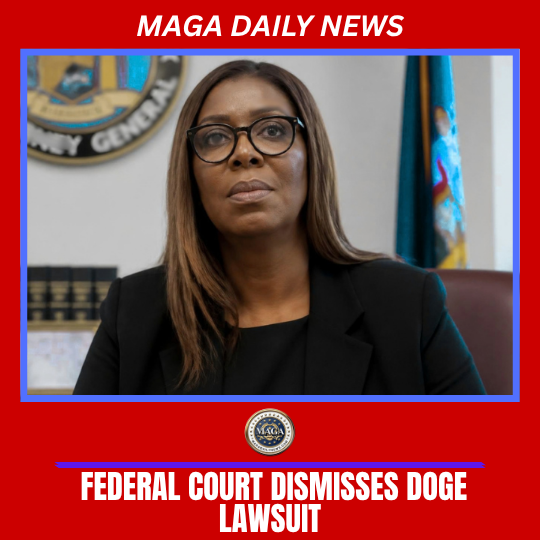
MAGA DAILY NEWS— A federal judge has dismissed a lawsuit brought by New York Attorney General Letitia James and 18 other states over access to sensitive Treasury payment systems by employees connected to the Department of Government Efficiency, commonly known as DOGE. While the lawsuit has now been dismissed, the larger issue reaches far beyond the courtroom: How does the federal government protect taxpayer money while also working to identify fraud, waste, abuse and improper payments? The case centered on access to federal payment systems used by the U.S. Department of the Treasury, which handles enormous amounts of federal money and sensitive financial information.
Protecting Taxpayer Money
The federal government manages trillions of dollars every year, and Treasury systems are involved in processing tax refunds, federal benefits, payments to government contractors and other federal transactions. With that much money moving through government systems, taxpayers have a reasonable expectation that those systems will be protected and that federal money will be handled properly. That means government agencies have to address two important responsibilities at the same time: protecting sensitive financial information while also making sure authorized employees have the tools and information needed to identify problems and improve government operations.
Why DOGE Became Part of the Discussion
The Department of Government Efficiency was created during the Trump administration with a stated goal of improving government efficiency and modernizing federal operations. Treasury established its own DOGE team in early 2025, and employees connected to that team worked on projects involving Treasury’s payment systems and government financial operations. Examining government systems can be an important part of finding ways to improve efficiency, identify unnecessary spending and understand where problems may exist. At the same time, access to government financial systems comes with serious responsibilities, including proper authorization, security requirements and limits on how sensitive information can be used.
Fraud, Waste and Abuse Are Bigger Than One Administration
The issue of fraud, waste and abuse in government did not begin with DOGE, and it will not end with the departure of one government team. Federal agencies have faced concerns about improper payments and financial controls for many years, and government watchdogs have repeatedly examined federal spending and identified areas where agencies can improve their financial controls. It is also important to understand that an improper payment does not automatically mean fraud. A payment can be considered improper for several reasons, including being paid in the wrong amount, being sent to the wrong recipient or being made when the payment did not meet program requirements. Determining whether fraud occurred requires evidence and proper investigation.
What Government Oversight Found
Government oversight officials separately reviewed aspects of the DOGE team’s access to Treasury payment systems. That review found that a Treasury DOGE employee had access to several payment systems during January and February 2025 and was able to view, copy and print information, while also receiving broader permissions in one system for a limited period. The review did not find evidence that the employee actually changed information in that system. However, the review also identified weaknesses in some of Treasury’s controls surrounding system access, resulting in recommendations for Treasury to strengthen its procedures. These findings demonstrate why oversight matters: Government officials need appropriate access to examine government operations, but that access must also be controlled carefully.
Efficiency and Security Must Work Together
There is an important balance between examining government operations and protecting sensitive financial systems. Government agencies cannot simply provide unlimited access to financial systems, but employees responsible for reviewing government operations need appropriate access to understand how those systems work and where improvements may be possible. Strong rules, clear authorization and ongoing oversight are essential. Agencies should know who has access to sensitive systems, what those employees are permitted to do and whether that access remains necessary. System activity should also be monitored, and established security requirements should be followed. Improving government efficiency should not mean weakening security, just as protecting government systems should not mean avoiding legitimate oversight.
The Lawsuit Filed by New York
New York and 18 other states filed the lawsuit after Treasury gave DOGE-affiliated employees access to certain federal payment systems. The states raised concerns about access to sensitive financial information and the operation of Treasury’s payment systems. The case eventually reached U.S. District Judge Jeannette Vargas, who was appointed during the Biden administration. The judge dismissed the case after the circumstances surrounding the Treasury DOGE team had changed. According to the ruling, the DOGE team at Treasury had been disbanded and no DOGE employees remained there. Because of that change, the judge determined that the claims concerning the DOGE employees’ access were moot. The judge also dismissed claims involving an automated payment-review system because the states had not alleged that the system had frozen or canceled a specific federal payment owed to them.
What the Ruling Does and Does Not Decide
The ruling should be understood based on what the court actually decided. The judge’s decision addressed the legal claims that were before the court and the circumstances that existed when the case was considered. It did not eliminate the federal government’s responsibility to protect Treasury systems, and it did not eliminate the need for continued oversight of federal spending. Those responsibilities continue regardless of whether a particular lawsuit moves forward.
The Numbers Show Why Oversight Matters
The federal government processes millions of financial transactions involving enormous amounts of taxpayer money. Government agencies have reported significant levels of improper payments over the years, and in fiscal year 2025, federal agencies estimated approximately $186 billion in improper payments. That figure does not mean $186 billion was stolen because improper payments can result from many different types of mistakes or payments that did not meet program requirements. Still, the number demonstrates why financial controls matter. When a mistake happens once, the financial impact may be limited, but when similar mistakes happen across millions of transactions, the cost can become enormous.
The Taxpayer Remains at the Center
For Americans who pay taxes, the most important question is whether government agencies are protecting public money and operating their programs properly. Taxpayers expect federal payments to reach the correct people and organizations for legitimate purposes, and they expect sensitive financial information to be protected. Those expectations do not change based on which political party controls the White House. Government accountability is a continuing responsibility.
Oversight Does Not End With One Lawsuit
The dismissal of this lawsuit does not end federal oversight of Treasury or other government agencies. Federal inspectors general, the Government Accountability Office and agency financial offices continue to examine government spending and financial controls. Their work can identify weaknesses that need to be corrected and can help agencies improve the way taxpayer money is managed. When problems are found, they should be examined carefully. When controls are weak, they should be strengthened. When evidence shows that money was improperly handled, the appropriate authorities can take the proper steps.
The Bigger Story Is Accountability
The Treasury and DOGE dispute became a political and legal story because it involved a federal agency, state attorneys general and an administration working to change how government operates. But underneath that debate is a much broader issue: The federal government has a responsibility to protect taxpayer money, safeguard sensitive financial information and look for ways to make government programs work more efficiently.
Those responsibilities do not belong to one political party or one administration. The DOGE team involved in this particular Treasury dispute has been disbanded, and that change was central to the judge’s decision. But the larger responsibility remains. Treasury must continue protecting federal payment systems, federal agencies must continue following financial controls, government watchdogs must continue examining spending, and taxpayers continue to have an interest in knowing whether their money is being handled properly. The lawsuit may have reached its end, but the larger conversation about government accountability, financial controls and protecting taxpayer dollars continues.
Disclaimer: This information is based on current reports and is for informational purposes only. The photo and text caption are AI generated. We represent M.A.G.A. — Morals ● Action ● God ● America—M.A.G.A., an online daily faith based news editorial.