By Staff Writer, Oakley Kate
September 23, 2026, M.A.G.A. Daily News
M.A.G.A. DAILY NEWS
Why Obamacare Enrollment Is Being Reviewed
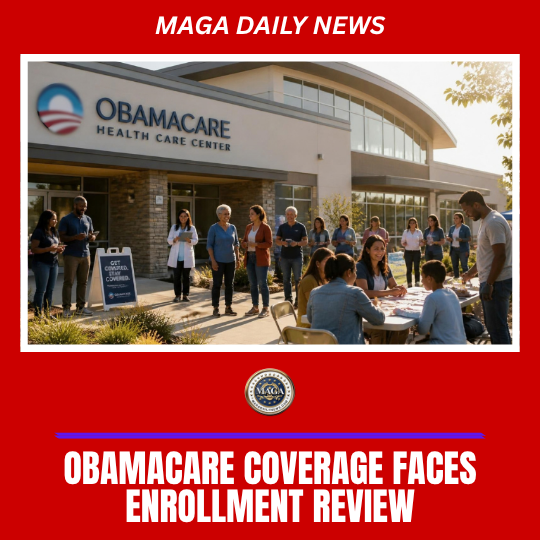
MAGA DAILY NEWS— The federal government is taking a closer look at enrollment in the Affordable Care Act health insurance Marketplace, commonly known as Obamacare. The failed project continues circling with mass debt problems and questionable provisions setforth by the past Obama administration.
On August 31, 2026, the Centers for Medicare & Medicaid Services, or CMS, said it canceled approximately 315,000 Marketplace enrollments covering more than 760,000 people after reviews confirmed that the enrollments were unauthorized. CMS said the action is expected to return about $2.2 billion in advance premium tax credit payments connected to those canceled enrollments.
What Does Verification Actually Mean?
Health insurance programs have rules about who can enroll and who can receive financial assistance. Verification is the process of checking information provided on an application to make sure it matches available records and required documents. This can include information involving identity, income, citizenship or immigration status, and other eligibility requirements.
A verification problem does not automatically mean a person intentionally did something wrong. Sometimes information may be missing, outdated, entered incorrectly, or unable to be confirmed through available government records. That is why it is important to separate a person who may have made an honest paperwork mistake from an enrollment that officials determine was unauthorized.
Why Accurate Enrollment Matters
Accurate enrollment matters because federal premium tax credits are used to help eligible people afford health insurance. When an enrollment is not authorized or does not meet program requirements, federal funds can potentially be paid toward coverage that was not supposed to receive those subsidies.
CMS says its current effort is focused on preventing improper enrollments, removing confirmed unauthorized enrollments, and strengthening oversight of insurance agents and brokers. The agency also says it is working with insurance companies to identify and review questionable enrollments rather than simply treating every Marketplace customer the same.
Making Sure Eligible People Keep Coverage
There is another important side to this issue. While government programs need strong verification systems, people who genuinely qualify for health coverage need to be able to get and keep that coverage.
Health insurance can help people receive regular checkups, manage ongoing health problems, obtain prescriptions, and seek medical care when they need it. Having coverage can also help families avoid putting off medical care because of the cost.
That means the goal of enrollment reviews should not simply be about removing questionable applications. It is also important that legitimate applicants understand the rules, provide the documents they need, and have a clear way to correct problems when information cannot immediately be verified.
The Difference Between Unauthorized and Eligible Enrollment
One of the most important details in this story is the difference between an unauthorized enrollment and a legitimate person whose information needs additional verification.
CMS says the 315,000 enrollments canceled in August were confirmed as unauthorized following its review process. That is different from saying that every person whose application raises a question is automatically ineligible. The agency says it will continue identifying and investigating potentially unauthorized enrollments before taking action on those cases.
This distinction matters because health insurance decisions can have real consequences for families. Someone who loses coverage needs to understand why the enrollment was canceled and what options may be available to them.
The Role Of Insurance Agents And Brokers
Insurance agents and brokers can help people navigate complicated health insurance choices, but CMS says some agents and brokers have also been part of its recent investigations.
According to CMS, the agency has issued termination notices to more than 200 non-compliant agents and brokers since January 2026. CMS also issued 569 notices of intent to terminate Exchange Agreements to agents and brokers who submitted 2026 applications without important identifying information, including Social Security numbers.
The agency is also requiring stronger identity checks for agents and brokers and additional consumer authorization before a broker can act on a consumer’s Marketplace application or enrollment.
Protecting Consumers From Unauthorized Changes
Another concern is whether people actually know they have been enrolled in a plan or had their insurance information changed.
CMS previously reported that approximately 200,000 consumers had their desired Marketplace plan selection changed without their consent during 2025. The agency said it worked with insurance companies to confirm affected consumers’ choices and restore coverage selections when appropriate.The Trump administration reportedly is offering up to $500.00 refunds to some receipants of Obamacare for various reasons relating to billing and more.
This shows why verification is not only about government spending. It can also be about protecting consumers from having insurance coverage changed without their knowledge.
A Growing Focus On Marketplace Integrity
The current review is part of a broader effort to strengthen the way the federal Marketplace handles enrollment. In March 2026, CMS reported that 23.1 million consumers selected or were automatically re-enrolled in coverage through HealthCare.gov and state-based exchanges for the 2026 plan year.
With millions of people using these programs, even a small percentage of improper enrollments can involve a large number of individuals and significant amounts of federal money. That is one reason verification systems can have an important role in protecting both consumers and taxpayers.
What Happens Next?
CMS says its work is continuing. The agency plans to keep working with health insurance companies to identify potentially unauthorized enrollments, investigate those cases, cancel confirmed unauthorized enrollments, and recover associated premium tax credit payments when appropriate.
The agency has also announced additional safeguards for future Marketplace enrollment. These include stronger identity verification for agents and brokers, additional documentation requirements, and electronic consumer authorization before an agent or broker can act on an application.
For consumers, this means keeping personal information accurate and responding to requests for documentation can become even more important.
Why Health Coverage Still Matters
At the center of this entire issue are real people who need access to medical care. Whether someone receives coverage through an employer, Medicare, Medicaid, the Affordable Care Act Marketplace, or another source, having appropriate health coverage can make it easier to receive care when it is needed.
Strong verification and access to health care do not have to be opposing goals. A system can work to prevent improper enrollment while also making sure people who meet the requirements are able to obtain the coverage available to them.
The larger question is how to maintain a system that protects taxpayer dollars, prevents unauthorized enrollment, safeguards consumers, and continues providing health coverage to people who genuinely qualify. As CMS continues its review, those issues will remain an important part of the national conversation about the future of the Affordable Care Act Marketplace.
Disclaimer: This information is based on current reports and is for informational purposes only. The photo and text caption are AI generated. We represent M.A.G.A. — Morals ● Action ● God ● America—M.A.G.A., an online daily faith based news editorial.