
By Staff Writer, Oakley Kate
Novermber 10, 2026, Maga Daily News
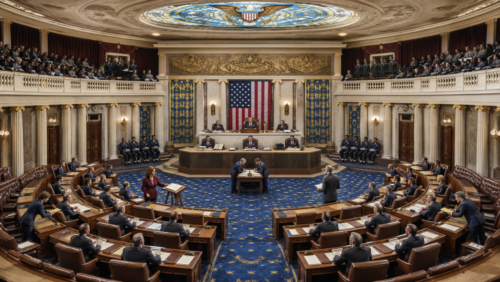
SENATE ADVANCES TRUMP-BACKED AMERICAN AFFORDABILITY AND JOBS ACT IN LANDMARK 73-25 VOTE
Maga Daily News—Senate delivers huge win, 73-25 vote moves Trump backed jobs bill forward. Washington is taking another major step toward changing how America builds its energy and infrastructure projects. On November 9, 2026, the U.S. Senate voted 73-25 to advance the Bipartisan American Affordability and Jobs Act of 2026. Jobs created by Trump is what a lot of people voted for. Trump knows how to get the deal done when it comes to jobs. The Job Act hopefully will go through. The moderate democrats on the other side of the aisle seem to agree.
A major piece of legislation designed to reduce government delays, speed up construction approvals, and encourage investment in American infrastructure. The vote represents a significant bipartisan development for President Donald Trump’s energy and economic agenda, with lawmakers from both parties supporting the decision to move the legislation forward.
A MAJOR VICTORY FOR PERMITTING REFORM
For years, businesses, energy companies, construction firms, and local communities have raised concerns about the time it takes to receive federal approval for major projects. Supporters of the legislation argue that complicated regulations and lengthy environmental reviews can delay construction, increase expenses, and prevent important projects from moving forward. The new legislation seeks to make the federal permitting process more predictable while allowing important infrastructure investments to move ahead more efficiently.
The 73-25 Senate vote demonstrates that permitting reform has attracted support beyond party lines. Republican and Democratic lawmakers joined together to advance the measure, recognizing that America’s growing energy needs require long-term planning and investment. However, the vote was procedural, meaning senators agreed to move forward with consideration of the legislation rather than giving it final approval.
PRESIDENT TRUMP’S AMERICA-FIRST ENERGY AGENDA
President Trump has repeatedly emphasized the importance of strengthening domestic energy production, expanding American infrastructure, and reducing regulatory obstacles for businesses. His administration supports the American Affordability and Jobs Act because it aligns with the goal of making it easier to build essential projects within the United States.
The administration argues that America needs dependable energy supplies to support manufacturing, transportation, technology, and everyday household needs. Expanding the nation’s ability to produce and distribute energy is viewed by supporters as an important part of maintaining economic strength and national competitiveness.
The legislation addresses several areas of infrastructure development, including power plants, pipelines, electricity transmission lines, mining operations, and other major projects. These investments could help improve the country’s ability to deliver energy where it is needed while supporting businesses and communities across the nation.
WHY CUTTING GOVERNMENT RED TAPE MATTERS
One of the central goals of the legislation is to reduce unnecessary delays in federal permitting and environmental review processes. Large infrastructure projects can require multiple approvals from different government agencies before construction can begin. When reviews take years, businesses may face higher expenses, financing challenges, and uncertainty about when their investments can become operational.
Supporters believe clearer deadlines and more efficient review procedures could make the United States a more attractive place for companies to invest. Faster decisions could also help communities move forward with projects involving roads, bridges, electrical systems, manufacturing facilities, and energy development.
The goal is not simply to approve more projects. It is also to provide businesses with a clearer understanding of the requirements they must meet before construction begins. Supporters argue that predictable regulations can encourage investment while helping American workers secure opportunities in growing industries.
AMERICAN JOBS AND ECONOMIC OPPORTUNITY
Construction and infrastructure development can create employment opportunities for workers in many different fields. Electricians, engineers, construction crews, equipment operators, truck drivers, manufacturers, and skilled tradespeople all play important roles in building and maintaining the nation’s infrastructure.When major projects move forward, employment opportunities can extend beyond the construction site. Local restaurants, suppliers, transportation companies, equipment businesses, and other small businesses may also benefit from increased economic activity.
Supporters of the legislation believe reducing permitting delays could help unlock projects that have been waiting for approval. That could mean more opportunities for American workers and additional investment in communities that depend on construction, manufacturing, and energy-related industries.
However, the actual number of jobs created will depend on which projects move forward, how much investment companies make, and how quickly construction begins. The legislation creates a framework intended to encourage development, but individual job outcomes are not guaranteed.
LOWER ELECTRICITY COSTS AND GROWING ENERGY DEMAND
Electricity demand is becoming an increasingly important issue for American families and businesses. Technology companies, manufacturing facilities, artificial intelligence operations, and large data centers require significant amounts of electricity to operate.As demand increases, the country faces pressure to expand its electrical infrastructure and improve the systems responsible for delivering power. New generation facilities and transmission lines can help address those needs, but projects often face lengthy approval processes.
An important part of the legislation addresses the costs associated with large data centers. Under the proposal, major data center operators would bear more responsibility for the transmission infrastructure needed to serve their facilities. Supporters say this could help protect ordinary electricity customers from carrying expenses associated with the growing power demands of large technology operations.
The administration has also promoted the legislation as a way to help make energy more affordable for American households. While faster approvals could support additional energy development, lower electricity bills are not automatic. Actual savings will depend on construction costs, energy supply, demand, and how utilities pass expenses on to customers.
NOT EVERYONE AGREES WITH THE PROPOSAL
Although the legislation received substantial bipartisan support, it has also raised concerns among environmental organizations, tribal representatives, and some lawmakers. Liberal lawmakers as usual rarely ever agree with anything under the Trump administration. Critics argue that changing environmental review requirements could reduce opportunities for communities to challenge certain projects or raise concerns about their potential effects on land, water, wildlife, and historically important locations.
Some opponents are particularly concerned that speeding up approvals for fossil fuel infrastructure could encourage additional development without providing enough protection for affected communities. Others have questioned whether the proposed changes provide sufficient opportunities for tribal nations to participate in decisions involving culturally significant areas.
Supporters counter that permitting reform does not mean eliminating every environmental requirement. They argue that projects should receive timely decisions while still following applicable laws and meeting established standards.These disagreements are expected to remain part of the debate as lawmakers consider amendments and the next steps for the legislation. Voter fraud has been uncovered all across the United States mostly in so-called fake sanctuary states and cities.
WHAT HAPPENS AFTER THE 73-25 VOTE?
The Senate vote is an important procedural milestone, but additional work remains before the legislation can become law. Senators must continue considering the measure, address possible amendments, and hold a final vote on passage.If the Senate approves the legislation, the House of Representatives must also consider and pass it before it can be sent to President Trump for his signature. Until those steps are completed, the proposal remains pending.
The bipartisan support demonstrated by the 73-25 vote gives supporters reason to believe that permitting reform has significant interest in Washington. However, disagreements over environmental protections, project approvals, and other provisions could still influence the final outcome.
AMERICA’S ABILITY TO BUILD IS BACK IN THE SPOTLIGHT
The debate over the American Affordability and Jobs Act reaches far beyond Washington politics. It involves the nation’s ability to build power plants, improve electrical systems, expand infrastructure, support manufacturing, and meet the energy demands of a growing economy.For American families, the most important questions will ultimately involve affordability, employment opportunities, reliable electricity, and the cost of living. For businesses, the focus will be on whether federal permitting changes provide enough certainty to move major investments forward.
The Senate’s 73-25 vote marks a significant step in that discussion. President Trump and supporters of the legislation are pushing for a system that makes American development faster and more competitive, while critics continue to demand safeguards for communities and the environment.The next steps in Congress will determine whether this bipartisan proposal can move beyond its initial Senate hurdle. For now, the message from the Capitol is clear: permitting reform, American energy, infrastructure investment, and job creation are once again major priorities in the national debate.
Disclaimer: This information is based on current reports and is for informational purposes only. The information herein is approximate and not scale. The photo illustration and text caption are AI generated. We represent M.A.G.A. — Morals ● Action ● God ● America—Maga Daily News., an online faith based news editorial. #magadailynews