By Staff Writer, Mercedes Sterling
October 26, 2026, Maga Daily News
Los Angeles Launches First Automated Speed Cameras as Drivers Face New Traffic Rules
New Speed Cameras Mark Major Change for Los Angeles Drivers
Maga Daily News—Los Angeles drivers speed cameras start Oct. 26. Los Angeles is moving forward with a new traffic safety program that uses automated speed cameras to help enforce speed limits and encourage safer driving. The system, which begins its initial rollout on October 26, marks a major change in how the city plans to monitor speeding on local streets. Drivers will need to pay attention to posted speed limits, learn where the cameras are located, and understand how the warning period works before financial penalties begin. The goal is to reduce dangerous speeding, protect people walking and biking, and make neighborhood streets safer for everyone.
How the New Camera Program Works
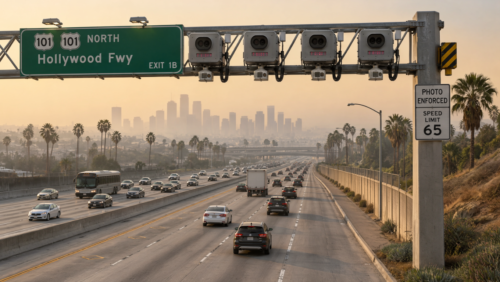
Automated speed cameras are designed to measure how fast vehicles travel through specific areas. When a vehicle passes a camera above the applicable speed threshold, the system can capture information used to review a possible speeding violation. Depending on the program’s rules, a notice may then be sent to the vehicle’s registered owner.
Unlike traditional traffic enforcement, automated cameras can monitor traffic without requiring an officer to stand beside the road and stop each driver. Supporters say this approach can help cities enforce speed limits more consistently, especially in areas where speeding creates serious safety concerns.
However, the cameras do not mean every driver passing through a monitored area will receive a ticket. The program’s enforcement rules, required speed threshold, review procedures, and notice requirements determine when a violation can result in a penalty.
What Drivers Need to Know About the 60-Day Warning Period
One of the most important details for motorists is the reported 60-day warning period. During this phase, drivers may receive warnings rather than financial penalties for qualifying violations, allowing the public time to become familiar with the new system.
The warning period is intended to give drivers an opportunity to adjust their habits before citations carrying fines begin. Motorists should not assume that the cameras are inactive simply because the initial phase focuses on education. Cameras may still record speeding events, and the city may use the early period to help drivers understand the rules.
Drivers should also check official city announcements for the exact start and end dates of the warning phase, the circumstances in which warnings are issued, and the date when monetary penalties become enforceable. Those details matter because the transition from warnings to fines can affect anyone who regularly drives through monitored areas.
How Much Will Speed Camera Tickets Cost?
After the warning period ends at an individual camera location, drivers who exceed the program’s enforcement threshold could face civil fines. The announced penalty schedule is based on how far above the posted speed limit a vehicle is traveling.
The initial fine schedule includes $50 for driving 11 to 15 mph over the limit, $100 for going 16 to 25 mph over, and $200 for going 26 to 99 mph over. Drivers traveling at least 100 mph could face a $500 fine. These penalties make it important for motorists to understand that even speeding below highway-racing levels can result in a financial penalty once enforcement begins.
The cameras are intended to target excessive speeding rather than minor differences in speed. Under the program, vehicles traveling at least 11 mph over the posted limit can trigger enforcement. Drivers should follow posted signs instead of assuming they can safely exceed the limit by a certain amount.
Where Will the Cameras Be Installed?
Los Angeles plans to establish a network of 125 automated speed enforcement systems across the city. The cameras are being placed along streets identified as priority safety corridors, including areas with histories of dangerous speeding, serious crashes, and risks to people walking or biking.
Locations near schools, senior centers, and other places where vulnerable road users may be present are among the areas considered for the program. The installations are planned across all 15 City Council districts, although not every camera will necessarily become active on the same day.
The first group of cameras began activating on October 26, with the remaining systems expected to come online by the end of 2026. Because each location has its own activation date and warning period, drivers should not assume that every camera will begin issuing fines at the same time.
Motorists who travel regularly through Los Angeles should pay attention to posted speed limits and photo-enforcement signs. Checking official city information about active camera locations can also help drivers understand where the new system operates.
Will the Cameras Photograph Drivers?
Privacy is another major question surrounding automated speed enforcement. According to the Los Angeles Department of Transportation, the systems are designed to capture rear license plate information needed to identify a vehicle involved in a possible violation. The program is not intended to photograph drivers’ faces or use facial recognition to identify motorists.
The city has also outlined rules governing the handling and retention of collected information. Images that do not result in a violation are subject to deletion within five days, while images associated with violations are subject to longer retention rules.
These protections are important because automated enforcement involves collecting information about vehicles moving through public streets. Residents may still have questions about how the system operates, who can access its records, and how officials ensure the rules are followed.
Clear explanations of the privacy safeguards will be important as the program expands. Public confidence may depend not only on whether speeding decreases but also on whether the city follows its stated policies for protecting collected information.
Will the Cameras Actually Make Streets Safer?
Supporters argue that automated speed enforcement can encourage drivers to slow down, particularly on roads where speeding has contributed to serious crashes. When motorists know that excessive speeding may result in a mailed warning or fine, they may be more likely to follow posted limits even when police officers are not nearby.
The city has pointed to results from other communities using similar technology. Oakland has reported a substantial reduction in excessive speeding at camera locations, while San Francisco has also reported improvements. Those findings offer a reason for Los Angeles officials to test the approach, although results can vary depending on road design, enforcement practices, and driver behavior.
Speed matters because it affects both a driver’s ability to react and the severity of a crash. A vehicle traveling faster needs more distance to stop, and a person struck by a vehicle at a higher speed faces a greater risk of serious injury.
Still, cameras alone cannot solve every traffic safety problem. Better street design, visible signs, safe crossings, and responsible driving all play important roles. The results of the Los Angeles program will help determine whether the technology delivers the improvements officials expect.
What Happens if a Driver Receives a Notice?
Drivers who receive a warning or citation should read the notice carefully and follow the instructions it provides. Notices are expected to be mailed to the registered owner of the vehicle, using information connected to the license plate.
Motorists should make sure their vehicle registration and mailing information are current. Anyone who believes a notice was issued incorrectly should review the official procedures for requesting a review or contesting a violation, rather than ignoring the notice.
The program’s citations are classified as civil violations, similar in some respects to parking-related penalties, rather than conventional criminal traffic charges. Under the announced rules, these citations do not add points to a driver’s license. However, motorists should review the specific notice and applicable rules if they have questions about their responsibilities.
A New Era for Los Angeles Traffic Enforcement
The launch of automated speed cameras represents a significant shift in how Los Angeles approaches speeding. The city is introducing technology intended to discourage dangerous driving while giving motorists a 60-day warning period at each camera location before fines begin.
For drivers, the most practical response is straightforward: watch the speed limit, pay attention to road signs, and understand the rules before the warning period expires. For city officials, the challenge will be showing that the program improves safety, protects privacy, and operates fairly across the communities it serves.
As the network expands toward 125 locations, residents will have an opportunity to judge whether the cameras produce meaningful results. The coming months will provide a clearer picture of whether automated enforcement changes driving habits and helps make Los Angeles streets safer.
Disclaimer: This information is based on current reports and is for informational purposes only. The photo illustration and text caption are AI generated. We represent M.A.G.A. — Morals ● Action ● God ● America—Maga Daily News., an online faith based news editorial.